
Manon Azar fotografo a Firenze
The ABC of Your Camera (a quick guide for new photographers)
1. Your Digital Camera Type: DSLR vs Mirrorless

2. Light Exposure: The Triangle
Shutter Speed (Exposure Time)
Lens Aperture (f)
Sensor Sensitivity (ISO)
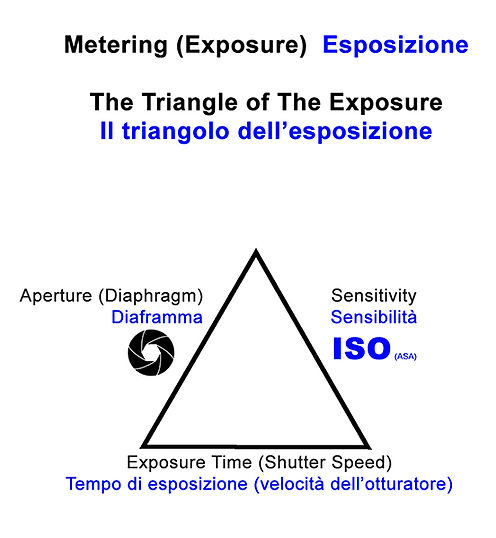


Note: Each setting has its own visual impact:
Shutter Speed:
Faster: freezed scene
Slower: blurrier and motioned subject (and if hand-held: shakier)
Lens Aperture:
Opener (smaller numbers): Shallower depth of field
Tighter (BIG numbers): Deeper depth of field
ISO: The more you boost, the more you get grain and quality loss!
And your final visual result is a combination of all!
Exposure Modes:
Matrix
Spot
Central Zone
Highlights
and maybe more...
An example for Depth of Field:

3. Lenses: Focal numbers and fields of view
Wide
Normal (human Eye: 42-50mm)
Tele
What is a "zoom" lens? and a "prime"?
Tips:
more tele = shallower depth of field (has to be controlled by photographer)*
more tele = more need for camera stability (to prevent camera shakes, better to have tripods or at least to use faster shutter speeds)
* to increase the depth of field with a fixed focal number: A) use tighter aperture (BIG f numbers), B) try to step back and get a bit farther from the subject if it does not ruin your composition.

4. Camera Sensor Size and Field of View Impact:

5. What the hell is White Balance (WB)?

6. Focus Modes:
Auto: Single, Continuous
Manual Ring
Want to improve your photography?
The MUST HAVE list:
. Tripod
. Tripod
. Tripod
. Good shoes
. A bunch of lens filters: ND, Polarizer
. Faster lenses (like f.1,8 or f.2)
. Patience
. Practice
. An editing software (at least like Photoshop Express or Afinity which are free)